


Summary
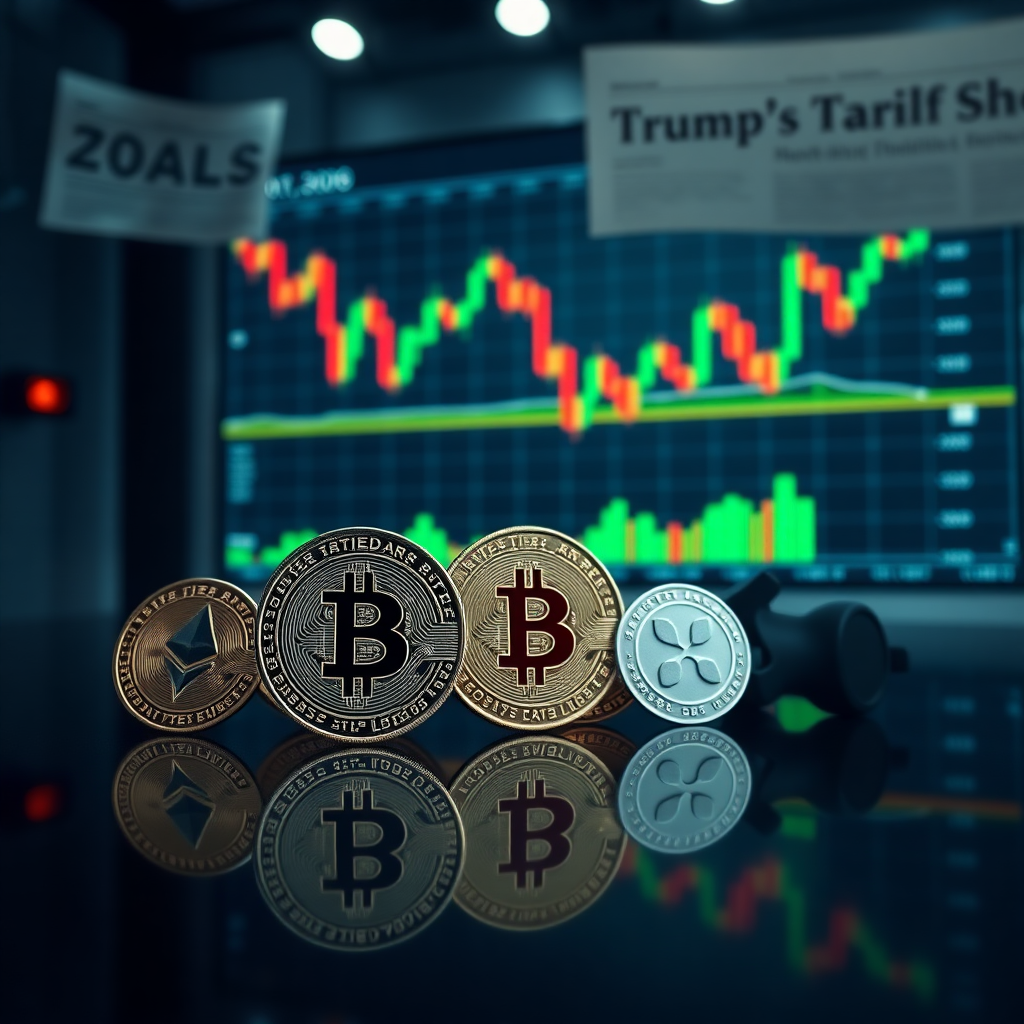
- Bitcoin’s Price Plummets: Following Trump’s weekend tariff pronouncements, Bitcoin’s value experienced a significant drop.
- Volatile Reactions: Markets react unpredictably to economic policy changes, demonstrating cryptocurrencies’ sensitivity to global affairs.
- Uncertainty Looms: Increased speculation around tariff impacts contributes to volatility in the digital currency landscape.
Introduction
In a world where financial markets hinge on political pronouncements, President Donald Trump’s recent tariff talk has sent ripples through the cryptocurrency arena. This article delves into how Trump’s economic maneuvers have sent Bitcoin and other digital currencies on a downward trajectory, prompting industry leaders to ponder the wider implications on this volatile market.
The Tariff Effect on Bitcoin
The cryptocurrency market, known for its drastic price swings, once again found itself at the mercy of external economic policies. In the wake of Trump’s weekend announcement concerning new tariff measures, Bitcoin’s price fell sharply, shedding nearly 6% of its value. This sudden drop is indicative of how susceptible the crypto market can be to international policy shifts.
Experts have long posited that digital currencies operate in a realm still heavily influenced by traditional market signals. David Gerard, author of “Attack of the 50 Foot Blockchain,” emphasizes, “Cryptocurrency prices often act like appendages of macroeconomics, reacting fervently to governmental policy changes.”
The Role of Tariff Announcements
President Trump’s pronouncements on tariffs are notorious for creating volatility not just in traditional financial markets but even more so in the emerging landscape of digital currencies. Amidst dialogues centered on trade, investors are left speculating—uncertainty that fuels market unpredictability.
These announcements compound existing instability within the cryptocurrency sphere, which is often at the mercy of broader economic currents. As tariffs reshape global trade dynamics, their potential to disrupt scenarios painted in either rosy or bleak economic colors cannot be underestimated.
Ripple Effects on the Digital Economy
While tariffs are but one of many factors influencing the cryptocurrency market, their significance cannot be overstated. As talks around tariffs begin, investors brace themselves for volatility that accompanies changing trade landscapes. Andrew Levi, a market analyst, reflects, “Tariff maneuvers can redefine entire segments of the economy. They introduce new uncertainties which technologies like cryptocurrencies are yet to robustly stand against.”
Moreover, the uncertainty stemming from such economic policies often leads to a panic-induced sell-off in Bitcoin and other cryptocurrencies. This behavior indicates how current cryptocurrency markets, despite their technological underpinnings, are still fundamentally emotional and speculative.
Conclusion
The tumultuous relationship between cryptocurrency markets and governmental economic policies continues to underscore the vitality of technology’s advancement into the financial domain. As tariffs become subjects of presidential discourse, this relationship becomes a more visible determinant of market stability or its lack thereof.
Going forward, the cryptocurrency domain remains intertwined with socio-political developments, necessitating that investors not only watch blockchain advancements but keenly follow economic rhetorics. As these complex relationships evolve, markets must be mindful of how these intersections shape both immediate pricing and longer-term innovations in finance and technology.

