


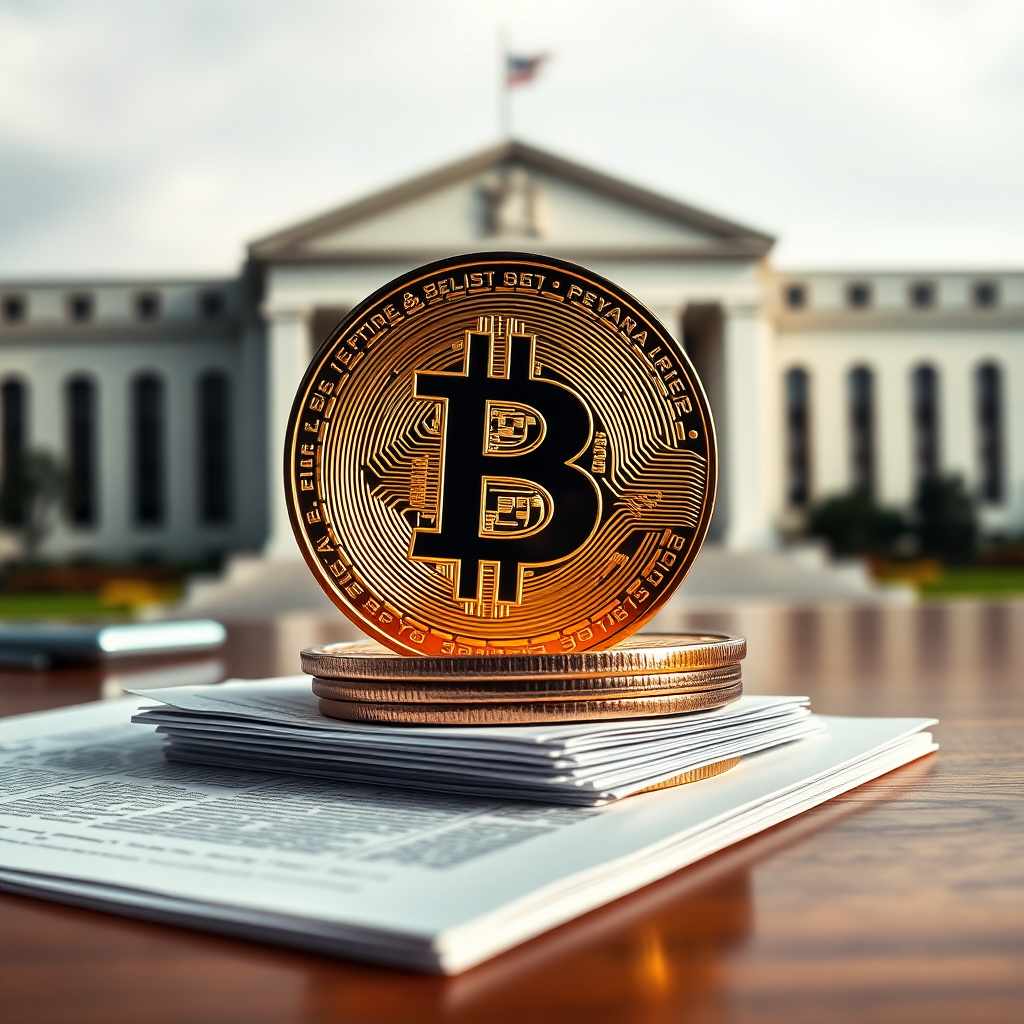
Fed’s Warning and BlackRock Align for Bitcoin’s Potential Surge
- The Federal Reserve’s recent warning signals potential volatility for the U.S. dollar.
- BlackRock’s significant involvement in Bitcoin could indicate confidence in the cryptocurrency’s future.
- Market analysts suggest a potential surge in Bitcoin price amid these developments.
- The interplay of traditional and digital finance highlights the evolving nature of global markets.
The Fed’s Caution: What It Means for the Dollar
The Federal Reserve recently issued a warning that has sent ripples across financial markets, indicating potential instability in the U.S. dollar. This announcement comes amidst growing concerns over economic policy directions and escalating inflation rates. As traditionally one of the most stable currencies globally, any forecast of dollar volatility is likely to have widespread implications, notably affecting how investors approach alternative assets like Bitcoin.
The Fed’s cautionary stance underscores a pivotal moment for both traditional and digital financial arenas. By signaling possible interest rate hikes and tightening monetary conditions, the Federal Reserve is nudging both institutional and individual investors to reassess their portfolios.
In essence, this could pave the way for increased attention towards assets not directly tethered to sovereign monetary policies.
BlackRock’s Bold Move in the Crypto Space
BlackRock, one of the world’s largest asset management firms, is steadily increasing its involvement in the cryptocurrency sector, with a marked emphasis on Bitcoin. This strategic pivot is capturing industry headlines, and many see it as a vote of confidence in the enduring potential of cryptocurrencies amidst fiat currency uncertainties.
CEO Larry Fink recently asserted that Bitcoin—and cryptocurrencies at large—present a prime opportunity for robust returns. BlackRock’s initiatives reflect a deepening commitment to digital currencies, including filing for a Bitcoin ETF and expanding their digital asset divisions. These moves are not merely speculative gambles; they are calculated strategies intending to capitalize on long-term asset diversification goals.
This commitment could contribute to bolstering market confidence and triggering a surge in Bitcoin prices.
Analysts Speculate on Bitcoin’s Trajectory
With the Federal Reserve’s warning and BlackRock’s involvement, market analysts are buzzing with speculative reflections on Bitcoin’s future trajectory. There’s a consensus that the cryptocurrency’s role as a hedge against inflation and a turbulently priced dollar could be significantly amplified as these dynamics unfold.
David Trainer, CEO of New Constructs, opines, “Bitcoin stands as a remarkable alternative asset poised to benefit from traditional currency uncertainties. BlackRock’s endorsement only strengthens this narrative, making Bitcoin an increasingly compelling investment for diversified portfolios.”
The Convergence of Traditional and Digital Finance
The growing interplay between traditional financial institutions and digital assets symbolizes a paradigm shift in global finance. With major players like BlackRock integrating cryptocurrency solutions into their service offerings, the lines between conventional banking and fintech are blurring. This convergence represents more than a temporary trend; it’s a redefinition of asset management as new financial landscapes emerge.
It also raises pertinent questions about how central banks and institutional entities will coexist with decentralized digital assets. The ripple effect of the Fed’s policy projections combined with BlackRock’s proactive embrace of Bitcoin could potentially drive innovation, forcing industries to adapt in real time.
Conclusion: A New Era of Financial Investment
The Federal Reserve’s pronouncements and BlackRock’s strategic forays into Bitcoin delineate an evolving investment era that mixes caution with opportunity. As investors grapple with the implications of a shifting dollar value, the allure of Bitcoin and other cryptocurrencies gains traction, promising both high returns and inherent risks.
As these financial titans chart new courses, they reflect an undeniable reality—a future where traditional and digital assets coexist, compete, and complement one another in unprecedented ways. This duality invites both scrutiny and optimism as stakeholders navigate this new economic frontier, redefining what it means to invest in an increasingly digital world.
Ultimately, the interplay between the Fed’s monetary policy, BlackRock’s assets, and Bitcoin’s market potential prompts investors to reflect on their long-term strategies. Will these dynamics usher in a new standard for financial growth, or will they exacerbate existing market volatilities? The upcoming months promise to unfold these narratives, inviting further exploration and strategic contemplation.

