


“`html
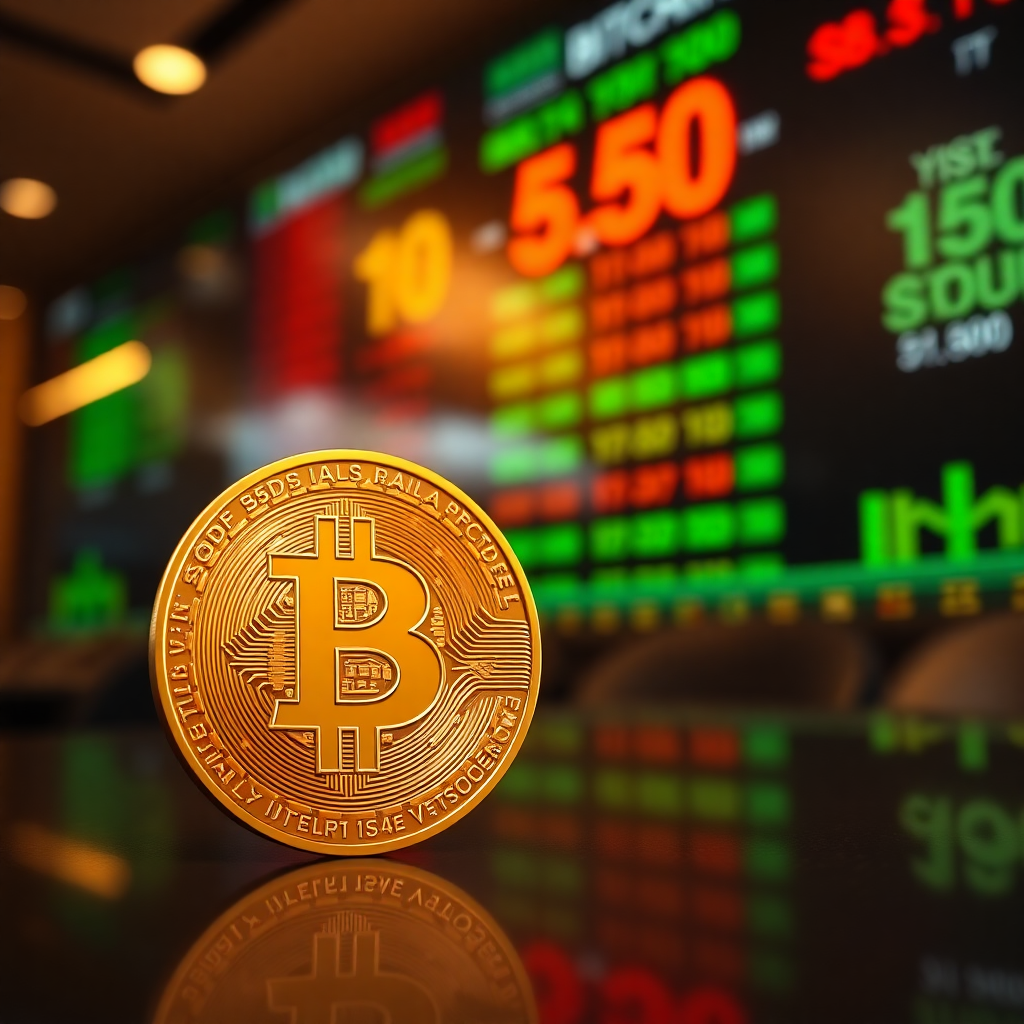
Bitcoin and S&P 500: Bracing for a Market Collision?
Summary
- Convergence of Assets: Bitcoin and the S&P 500 show increasing price correlation, raising questions about diversification benefits.
- Market Risks: Rising market uncertainties could amplify risks associated with hedging strategies traditionally used with these assets.
- Economic Impacts: The potential correlation signals broader economic implications if both markets face significant downturns simultaneously.
- Future Outlook: Investors may need to reassess portfolio strategies amidst evolving market dynamics.
The Increasing Correlation between Bitcoin and the S&P 500
The financial world’s general notion has always posited Bitcoin as a diversification tool, distinct due to its decentralized nature. However, market analysts are now raising alarms regarding an unexpected trend: the increasing correlation between Bitcoin and traditional equity markets, especially the S&P 500. As of late, both assets seem to be moving in lockstep more frequently, an occurrence that challenges the fundamental diversification principle.
Implications of Market Risks and Uncertainties
The potential market collision between these two assets brings forth a variety of risks. Analysts have pointed out that the traditional hedging strategy could become outdated. During periods of economic uncertainty, investors often rely on diversifying their portfolios to manage risks better. However, as Bitcoin and S&P 500 appear to be influenced by similar macroeconomic factors, such as inflation and interest rate changes, they may not offer much-needed stability when one market begins to falter.
Broader Economic Considerations
The increased correlation could have far-reaching economic implications. Should both markets face downturns simultaneously, the typical cushioning effect offered by a diversified portfolio would be diminished. Investors would face compounded losses, potentially leading to broader economic repercussions. This is particularly worrisome as both Bitcoin enthusiasts and traditional market investors might see their assets decline without the safety net previously provided by diversified investments.
Reassessing Investment Strategies
In light of these developments, investors might need to revisit their portfolio strategies. The traditional approach of diversifying between Bitcoin and equities like the S&P 500 for risk management purposes might no longer be as effective as it once was. Analysts suggest exploring alternative assets or perhaps adjusting real-time strategies in response to evolving market dynamics. Emphasizing a flexible investment process could become a prudent approach to navigating the uncertain terrain.
Conclusion: Navigating the Collision
As the financial markets brace for potential turbulence, the growing correlation between Bitcoin and the S&P 500 is a notable development warranting attention. Concerns about market risks and economic impacts are driving discussions about future investment strategies. Investors might find themselves at a crossroads, forced to reconsider their diversification methods and prepare for unforeseen market collisions. Ultimately, the financial world stands on the cusp of a new era, where convergence could redefine established norms and necessitate novel approaches to investment strategy and risk management.
“`

