


Bitcoin Reignites Dance with US Stocks Amid Market Downturn
Summary
- Bitcoin’s correlation with US stocks reaches peaks last seen over two years ago.
- Economic uncertainty contributes to synchronized movements in equities and crypto markets.
- Key economic indicators and rate policies influence both asset classes.
- Industry experts debate Bitcoin’s role as a hedge or a high-risk asset.
Introduction
Amid current financial turbulence, Bitcoin has once again shown a strong correlation with US equities, reigniting a relationship that signals broader market stress. Investors and analysts are closely examining this renewed synchronicity as both asset classes face increased volatility. Understanding the dynamics between Bitcoin and US stocks is crucial as they appear to be shadowing each other in response to economic downturns and policy uncertainty.
The Reemergence of Correlation
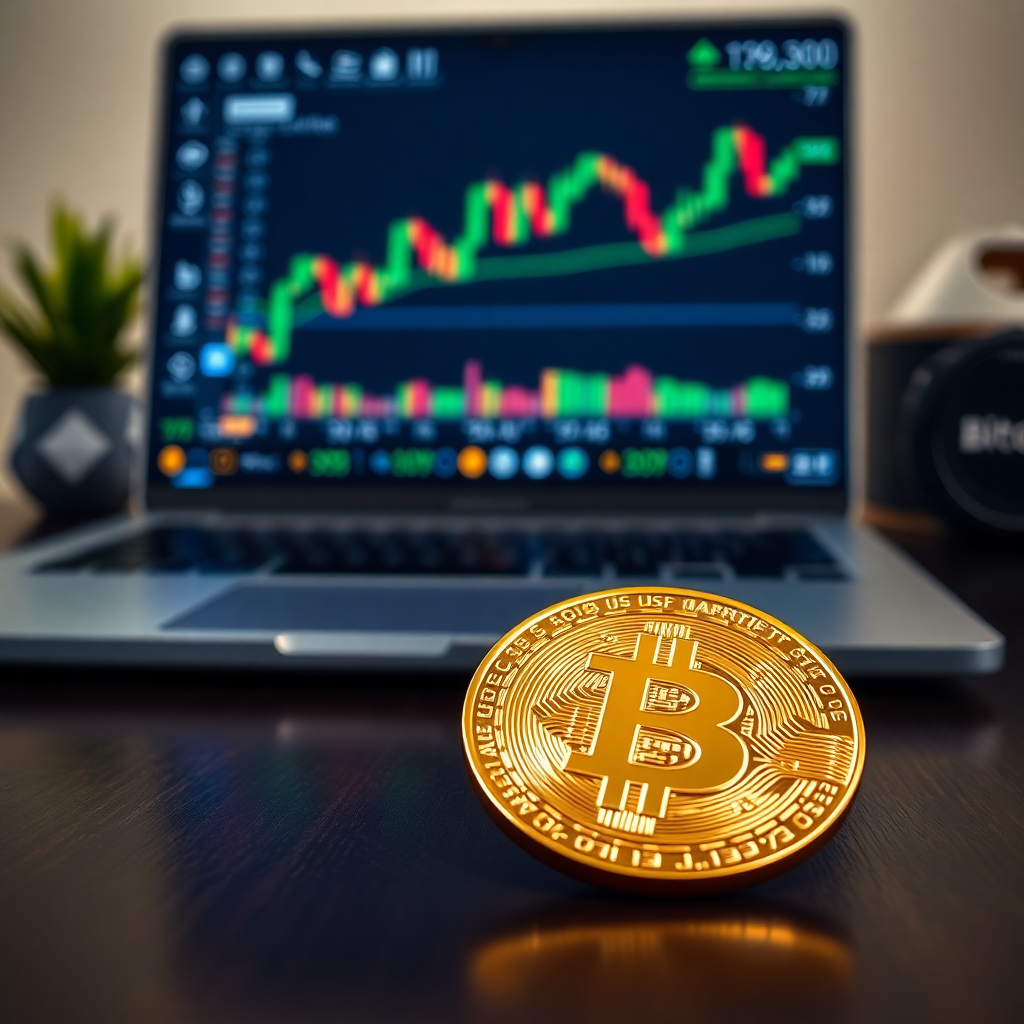
In recent months, the relationship between Bitcoin and US stocks has intensified, with correlation metrics approaching those seen at the height of the pandemic-induced market upheavals. The linkage between these two divergent asset classes challenges the notion of Bitcoin as a market-independent entity. Market data from Bloomberg indicates that Bitcoin’s latest correlation levels with major US indices are at their highest since early 2023, bringing attention back to their interconnected behavior.
Economic Influences
Global economic uncertainty and fluctuating interest rates are major contributors to this correlation. As economic datasets reflect an inflation-wary environment, both Bitcoin and stocks have shown similar reactions to announcements from central banks like the US Federal Reserve. As Kristina Hooper, Chief Global Market Strategist at Invesco, suggests, “Bitcoin has been acting as a high-beta version of the stock market.” This pattern mirrors broader investor sentiment in times of economic ambiguity.
Key Players in Motion
In today’s financial climate, major institutions and individual investors alike are moving between markets in search of stability and returns. The decisions of key players in the industry often exacerbate the synchronized fluctuations of crypto and equity assets. Analysts are keenly observing institutional activity for clues on future trends, noting that the behavior of large funds can amplify market movements.
Debating Bitcoin’s Role
The renewed Bitcoin-equity correlation prompts renewed debates among the financial community regarding Bitcoin’s place as a traditional hedge against market downturns. Historically viewed as “digital gold,” Bitcoin’s behavior alongside stocks calls into question its effectiveness as a standalone bearer of value. Critics argue that Bitcoin remains susceptible to market trends, while proponents insist it provides diversification benefits over longer timeframes.
A High-Risk Asset?
Many experts continue to categorize Bitcoin as a speculative asset with potential for high-risk returns. As Peter Rosenstreich, Head of Market Strategy at Swissquote Bank, asserts: “Bitcoin and crypto assets lack the intrinsic safety that traditional hedges like gold provide.” This perception could affect future investment inflows, particularly from risk-averse entities.
The Forward Path
With emerging trends pointing to more regulatory scrutiny and evolving technologies within the blockchain sphere, investors and analysts are speculating on the next steps for the crypto market. While the correlation persists, the potential for either divergence or even stronger ties with traditional markets remains an open question. The upcoming economic data releases and policy directions will likely chart the path forward for Bitcoin and US markets alike.
Conclusion
As Bitcoin and US stocks continue their joint dance in a landscape marked by uncertainty, the question of how tightly their paths are intertwined lies at the forefront of investment strategy conversations. The current state of economic affairs demands a consideration of both the short-term dynamics and the potential long-term roles of these assets. Whether Bitcoin ultimately solidifies its status as a protective asset or continues as a high-risk companion to equities will be critical to monitor. Investors, traders, and policymakers alike must navigate this complex relationship with both caution and optimism.

