


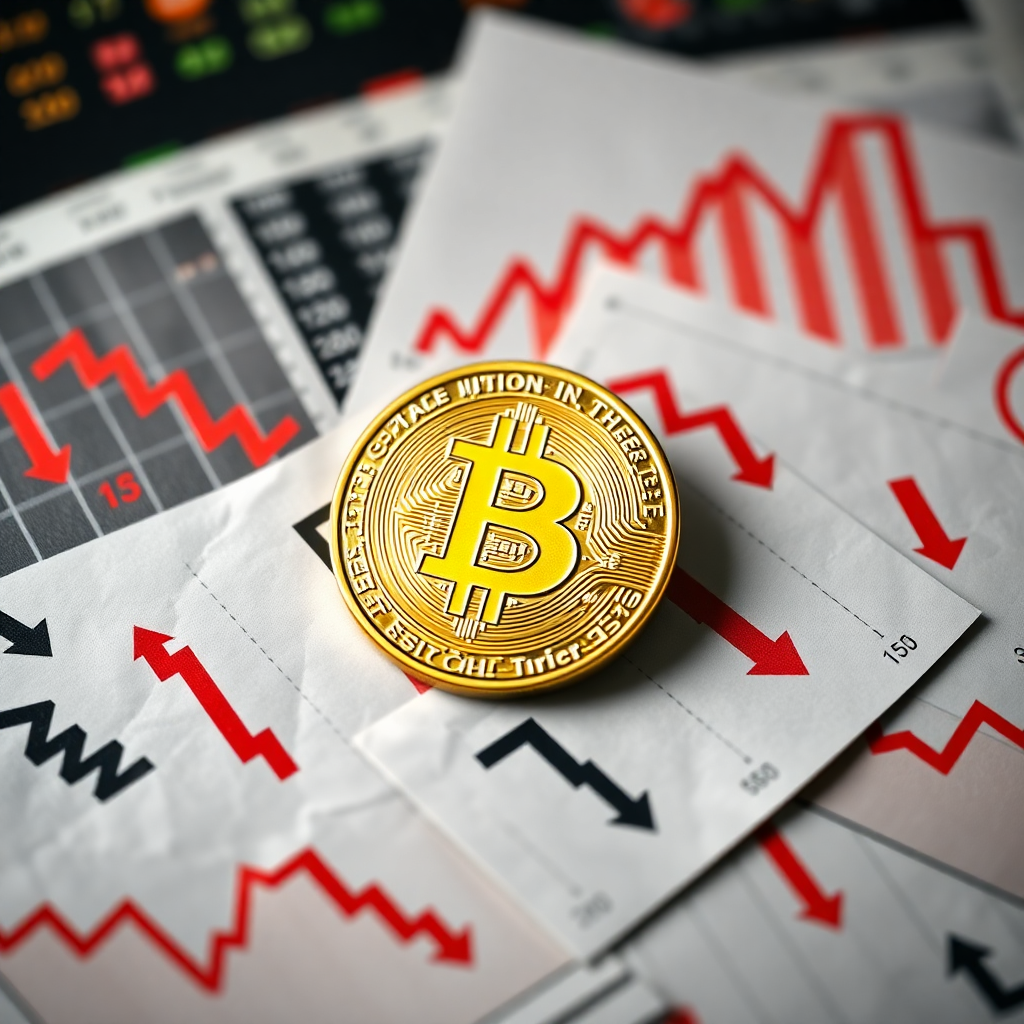
Bitcoin Surges as Stocks Plummet in Trump Tariff Chaos
Summary
- Bitcoin thrives as traditional markets struggle, showcasing its potential role as a safe-haven asset.
- U.S. President Donald Trump’s tariff policies create economic uncertainty, impacting global stock markets.
- Concerns over inflation rise following the Federal Reserve’s statements, influencing investor behavior.
- Analysts observe a decoupling trend between cryptocurrency and the stock market, sparking increased interest in Bitcoin.
Bitcoin Breaks Free From Traditional Market Trends
In a significant shift, Bitcoin is asserting itself as a reliable investment vehicle amidst traditional asset turmoil. The cryptocurrency made notable gains as the U.S. stock market faced downward pressure, falling 3.5% in a panic over escalating trade tensions. Investors, spooked by U.S. President Donald Trump’s aggressive tariff strategy, sought refuge in Bitcoin’s decentralized nature. This movement suggests an emerging trend where cryptocurrencies might provide a hedge against traditional economic instability.
Tariff Tangle: Trump Stirs Economic Uncertainty
The catalyst for the recent market upheaval stems from Trump’s latest round of tariff implementations targeting major trade partners. The administration’s aim to reshape international trade relations has introduced unpredictable dynamics, leading to volatility in global markets. This approach has sparked investor anxiety, prompting a shift in asset preference towards Bitcoin, perceived as less correlated with political turmoil. Such scenarios underscore the vital intersection between geopolitical maneuvers and financial market responses.
Inflation Worries: The Fed’s Cautious Stance
Meanwhile, the Federal Reserve’s statements have intensified fears of rising inflation. The Fed’s outlook indicates potential increases in interest rates, adding complexity to the investment landscape. As traditional investment options become less alluring due to inflationary pressures, Bitcoin emerges as an attractive alternative, unaffected by the same macroeconomic factors that ensnare fiat currencies. As investors grapple with these changes, alternative assets like Bitcoin are gaining traction.
Analysts Weigh In: Bitcoin’s Newfound Independence
Market analysts have observed Bitcoin’s increasing autonomy from traditional asset classes. The decoupling trend suggests that Bitcoin is not merely a speculative contender but an asset with intrinsic value, especially in times of financial distress. Industry experts highlighted how this separation could further validate Bitcoin’s status as “digital gold.” Many foresee the cryptocurrency bolstering its position as a mainstream financial instrument, potentially altering asset allocation strategies in portfolios worldwide.
Conclusion: A New Era for Cryptocurrency?
The recent market dynamics indicate profound changes in how cryptocurrencies are perceived in the global financial system. As Bitcoin demonstrates its resilience in the face of stock market turbulence, it invites broader contemplation regarding the future of digital currencies. This trend challenges traditional notions of safe-haven assets and calls into question the sustainability of fiat currencies amidst geopolitical instability.
For investors and analysts, the Bitcoin surge amid tariff chaos reiterates the importance of diversification. While traditional markets face ongoing uncertainties, Bitcoin’s momentum might be the beginning of a new era, where digital currencies play a pivotal role in economic safety nets. As the financial landscape evolves, so too does the opportunity for both individual and institutional investors to rethink strategic asset management.

